Yun Dong-ju
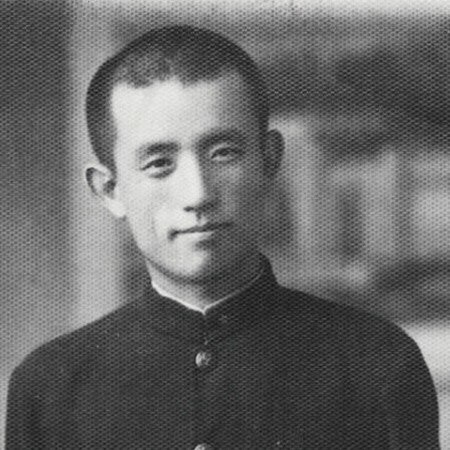
Image : https://en.wikipedia.org/wiki/Yun_Tongju
Yun Dong-ju (윤동주) is one of Korea’s most beloved poets. Not because he wrote extensively, nor because he led an extraordinary life, but because his poems feel as if they are spoken in a low voice, with sincerity. They ask simple yet profound questions: how can one live without betraying one’s conscience? How can one remain true to oneself when the world around demands silence?
Born far from Korea
Yun Dong-ju was born in 1917 in Myeongdong, a Korean village located in Manchuria, on a territory that was at the time administered by China. Many Korean families were living in this region, having fled poverty or Japanese rule. Yun Dong-ju thus grew up within a Korean community, but outside the Korean peninsula. This situation—somewhere between belonging and distance—deeply shaped the way he saw the world.
He was raised in a Christian family where great importance was placed on education, morality and language. From an early age, he loved writing, observing nature and looking at the sky. His poems would always retain this simplicity: clear words, restrained images, as if he deliberately refused excess.
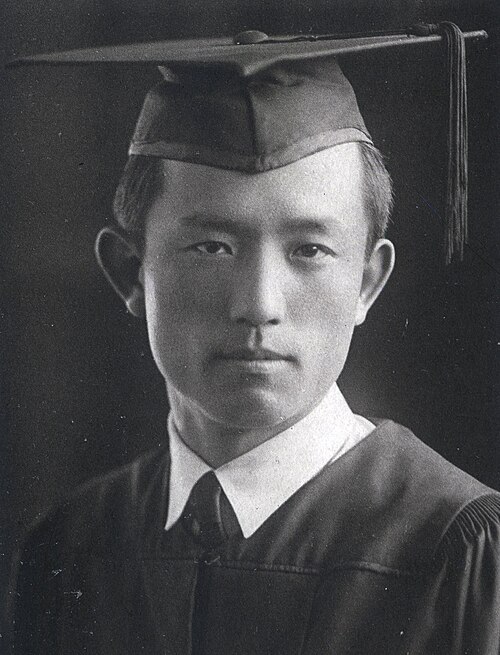
After completing secondary school, Yun Dong-ju went to study in Korea, first in Pyongyang and later in Seoul, at Yonhi College (now Yonsei University). He wrote constantly, yet never stopped doubting himself. He questioned whether it was legitimate to write poetry under Japanese occupation, and whether he should not act differently, more directly.
He also spent time in China, particularly in the Yanji region, where many exiled Korean intellectuals lived. Once again, he felt both surrounded and alone—deeply committed inwardly, yet unable to turn to violence or hatred. Poetry became both a refuge and a space for self-examination.
Image : https://en.wikipedia.org/wiki/Yun_Tongju
Japan and the weight of silence
In 1942, Yun Dong-ju went to Japan to continue his studies, first in Tokyo and then in Kyoto. Like all Koreans at the time, he was forced to adopt a Japanese name, an ordeal he found deeply distressing. This imposed change struck at the most intimate part of him: his identity, his language, his name.
It was in Japan that he wrote some of his most well-known poems, including “Prologue”, in which he expresses his wish to live without shame, gazing at the sky until the very end. These simple lines are now familiar to almost every Korean.
Arrest and death
In 1943, Yun Dong-ju was arrested by the Japanese authorities on suspicion of involvement in independence activities. He was imprisoned in Fukuoka, where he died in February 1945, at the age of 27—just a few months before Korea’s liberation.
The exact circumstances of his death remain unclear. Many believe he was subjected to mistreatment or medical experiments. His death was quiet and unjust, mirroring the fate of so many lives broken during that period.
A short body of work
Yun Dong-ju published almost nothing during his lifetime. He hesitated, judged himself too imperfect, and feared failing to remain faithful to his values. After the war, his friends gathered his poems into a collection titled Sky, Wind, Stars and Poetry, published in 1948.
The book quickly became a major work of modern Korean literature. It contains poems about nature, faith, youth and guilt, but above all about the desire to remain honest with oneself. Yun Dong-ju does not openly denounce; he observes, he doubts, he questions.
Even today, Yun Dong-ju remains very present in Korea. His poems are studied in schools, quoted in speeches, and engraved on stones in parks and museums. Yet beyond official commemoration, he continues to move readers precisely because he does not preach.
To read Yun Dong-ju is to hear the voice of a young man who could have been anyone. Someone who did not know how to be a hero, but who tried—simply—not to lie to himself.
서시 - Prologue
죽는 날까지 하늘을 우러러
한 점 부끄럼이 없기를,
잎새에 이는 바람에도
나는 괴로워했다.
별을 노래하는 마음으로
모든 죽어 가는 것을 사랑해야지.
그리고 나한테 주어진 길을
걸어가야겠다.
오늘 밤에도 별이 바람에 스치운다.
Until the day I die
I long to have no speck of shame
when I gaze up toward heaven,
so I have tormented myself,
even when the wind stirs the leaves.
With a heart that sings the stars,
I will love all dying things.
And I will walk the way
that has been given to me.
Tonight, again, the wind brushes the stars.
Translated by Chae-Pyong Song and Darcy Brandel